
At a glance: Florida school districts, colleges, and universities that own their arrays can receive the federal §48E credit as an IRS elective payment, but solar that begins construction now must be in service by December 31, 2027, and arrays of 1 MW AC or more face a domestic-content test that can cut the payment to zero. This guide covers how campus load and summer break shape sizing, rooftop versus canopy versus storage, occupied-campus construction, the rules to recheck, and a board-ready checklist.
School solar Florida projects are now governed more by the calendar than by panel prices. A public school district, state college, or university that owns its array can receive the federal clean electricity investment credit as an IRS payment through elective pay, but solar that begins construction now must be placed in service by December 31, 2027, and a campus array of 1 megawatt AC or more faces a domestic-content test that can reduce that payment to zero. A district that sizes the array wrong or misses the summer 2027 construction window can lose the credit on the whole project. This guide covers owner decisions for K-12 districts, colleges, and universities, and leaves eligibility for any specific campus to the institution’s tax advisor and attorney.
School solar Florida rules: what changed for districts and universities in 2026?
Florida school solar decisions in 2026 turn on federal tax timing, a federal payment rule for tax-exempt owners, and an unchanged state utility statute. The U.S. Department of Energy’s Better Buildings K-12 program reports that K-12 districts spend nearly $8 billion a year on energy, their second-largest expense after teacher salaries. Under 26 U.S.C. §48E(e)(4), the credit does not apply to solar property placed in service after December 31, 2027 when construction began after July 4, 2026. On June 6, 2026, a federal district court vacated IRS Notice 2025-42 in Oregon Environmental Council v. IRS, restoring the earlier beginning-of-construction framework for now; AGT’s commercial solar tax credit deadline guide tracks any appeal.
Tax-exempt owners reach the credit through elective pay. The IRS elective pay and transferability guidance requires pre-filing registration, and the registration number must appear on the return for the election to take effect. Size then decides how much survives. Under 26 U.S.C. §45Y(g)(12), which §48E applies to elective payments, a facility under 1 MW AC keeps 100 percent of the credit, while a larger facility that began construction after 2025 without meeting domestic content receives 0 percent unless a Treasury exception applies.
Can a Florida school district get the federal solar credit? A public district, state college, or university that owns its array can elect to receive the §48E credit as an IRS payment after pre-filing registration. Arrays under 1 MW AC avoid the domestic-content reduction. Larger arrays that start construction after 2025 must meet the domestic-content rule or an exception, or the payment is zero.
The state rule that shapes financing is older. Section 366.02, Florida Statutes defines a public utility as an entity supplying electricity to the public, and AGT’s guide to commercial solar PPA rules in Florida explains why that definition, read with the Florida Supreme Court’s 1988 PW Ventures decision, generally rules out an on-site power purchase agreement. Most Florida campuses therefore own their arrays, which is why elective pay matters here.
How does a campus solar array earn its value on a school calendar?
A school solar array earns most of its value by displacing electricity the campus would otherwise buy at the moment the array produces it. Florida arrays produce heavily from spring through summer, when a K-12 campus is largely empty, so more of that output leaves through the meter. Under Florida Administrative Code Rule 25-6.065, excess energy delivered to an investor-owned utility is credited against the next month’s consumption, credits can offset usage for up to twelve months, and unused credits at calendar year end are paid at a rate set from the utility’s COG-1 as-available energy tariff instead of the retail rate.
That rule rewards sizing discipline. Summer exports bank as credits and get used from August through December, when chillers and rooftop units return to full load. An array sized to the campus’s annual consumption usually absorbs its own credits by year end; an array sized past that point turns surplus into payouts at the as-available rate.
Demand charges, covered in AGT’s explainer on Florida net metering for commercial accounts, behave differently. A school on a commercial demand rate pays for its highest metered interval, and Florida’s afternoon cumulus can cut output for minutes at exactly the hour the campus peaks. Solar reduces kilowatt-hours reliably and kilowatts unreliably. Battery storage for commercial buildings can hold a peak down through a cloud passage, but its value depends on the rate schedule and is not positive on every tariff.
Universities follow a different load curve. Labs, residence halls, and summer terms keep consumption high year-round, so a university array is usually absorbed on site. The binding limits are the rule’s 2 MW ceiling and its requirement that a system’s gross power rating not exceed 90 percent of the customer’s distribution service rating; Tier 3 systems above 100 kW can be required to carry up to $2 million in liability insurance. Municipal utilities and cooperatives set their own net metering terms.
| Campus type | Load in June and July | Where summer solar output goes | What to size against |
|---|---|---|---|
| K-12 elementary or middle school, no summer sessions | Low; cooling relaxed, kitchens closed | Mostly exported as net metering credits | Annual consumption of the meter it serves; avoid year-end surplus |
| K-12 high school with summer programs or shelter role | Moderate; partial wings conditioned | Split between on-site use and credits | Annual consumption plus any critical loads named for storage |
| State or community college | Moderate; summer terms, reduced schedules | Mostly used on site | Service rating limit and the 1 MW AC elective-pay line |
| University with research and residence halls | High; labs, housing, data rooms | Used on site | 2 MW net metering ceiling per system, service rating, and the 1 MW AC line |
Rooftop, carport, or storage: which school solar configuration fits a Florida campus?
Most Florida campuses choose among rooftop arrays on classroom wings and gyms, canopies over parking lots and bus loops, and either one paired with battery storage. A rooftop array has the lightest structure and shares the roof’s service life. AGT’s 75.6 kW DC array at the Episcopal School of Jacksonville sits on a new Carlisle roof on ballasted racking with limited anchors, chosen to protect the roof warranty. Modules on a fifteen-year-old roof mean a remove-and-reinstall halfway through the array’s life, which is why AGT’s commercial solar roof warranty guide puts the roof assessment first.
Canopies leave the roof alone. AGT installed solar canopies at more than 100 Florida public schools under a five-year pilot program authorized by the Florida Public Service Commission, and Solar Power World’s 2026 Top Solar Contractors list ranked AGT #1 among Florida commercial and industrial EPC contractors. Canopies carry more steel, drilled foundations, and trenched conduit. AGT states that its solar carport structures are designed for wind speeds up to 180 mph, a design rating that storms can exceed.
Storage is the shelter question. The Florida Solar Energy Center reports that its SunSmart E-Shelter Schools program has installed more than 115 10-kW photovoltaic systems with battery backup on shelter schools since 2010; ten kilowatts covers selected critical circuits. Section 1013.372, Florida Statutes requires new educational facilities to incorporate public shelter design criteria unless exempted, so define critical loads with county emergency management before sizing a battery. A large statewide EPC is also not the lowest-cost choice for a single classroom demonstration array.
| Configuration | Best fit | What it delivers | Where it falls short |
|---|---|---|---|
| Rooftop, ballasted | Low-slope roofs with recent replacement and structural capacity | Fewest penetrations; fastest install on a summer schedule | Adds dead load; roof must outlive the array or the owner pays to remove and reinstall |
| Rooftop, mechanically attached | HVHZ counties and wind zones where ballast alone will not satisfy design | Attachment designed to the engineer’s wind pressures | More penetrations to flash and keep under the roof manufacturer’s warranty |
| Parking or bus-loop canopy | Campuses with large lots and older roofs | Independent of roof life; shade for vehicles and pickup lines | Higher structure and foundation cost; trenching and lot closures during construction |
| Ground mount | Universities and districts with unused, unflooded land | Lowest structure height; simple maintenance access | Land, fencing, stormwater review, and a longer run to the service |
| Solar plus battery for shelter loads | Designated shelter schools and campus critical facilities | Backup for defined circuits during outages; possible demand reduction | NFPA 855 and fire marshal review; value varies by tariff; sized for named circuits only |
What moves the budget, schedule, and results of a school or university array?
The installed cost of a school array is set more by structure, roof condition, and electrical scope than by module price, and AGT publishes no school pricing. AGT’s commercial solar cost per watt guide lists sourced third-party ranges with their assumptions; a board budget should start from a site assessment instead of a statewide average.
| Driver | Why it moves cost, schedule, or credit | Who confirms |
|---|---|---|
| System size relative to 1 MW AC | Under 1 MW AC keeps 100% of the elective payment and a 30% rate without prevailing wage and apprenticeship rules (26 U.S.C. §48E, §45Y(g)(12)) | Tax advisor; whether separate arrays count as separate facilities is their call |
| Domestic content and FEOC sourcing | Facilities of 1 MW AC or more starting after 2025 need domestic content for elective pay; FEOC material assistance rules also apply | Tax advisor with the EPC’s procurement documentation |
| Roof age and condition | A roof with less remaining life than the array adds a remove-and-reinstall cost | Roof consultant; core cuts and moisture survey |
| Structure type | Canopies add steel, foundations, and trenching; rooftop adds structural review | Structural engineer of record |
| Service rating and interconnection | Rule 25-6.065 caps system rating at 90% of service rating; Tier 3 adds study charges and insurance | Utility account manager; electrical engineer |
| Construction window | K-12 work clusters into summer break; placed in service by December 31, 2027 | Facilities director; district calendar |
What changes when the array goes on an occupied Florida campus?
On a school campus, the construction schedule is built around instruction, testing, and transportation. K-12 rooftop work, crane picks, and canopy foundations concentrate between the last day of school and teacher pre-planning, a window each district sets. Work during the school year moves to weekends. The electrical tie-in needs a planned service outage on a non-instructional day, noticed in writing to the principal and food service manager.
Section 1012.465, Florida Statutes requires contractual personnel on school grounds when students are present to meet level 2 background screening, so the crew roster is cleared before the first summer program day. At the Episcopal School of Jacksonville, AGT worked under a site-specific safety plan with fall protection and weather monitoring. Universities rarely go quiet, so phasing follows research shutdowns, housing, and event parking.
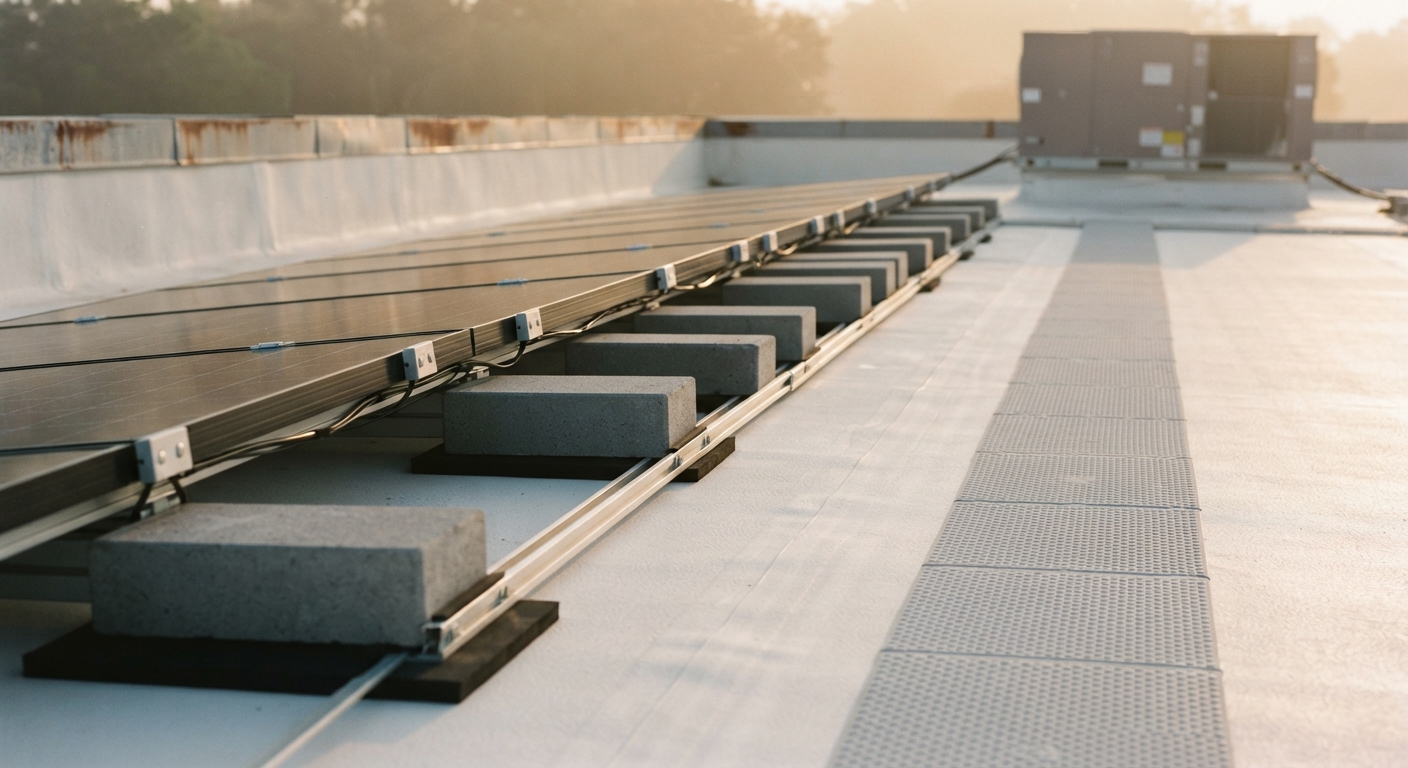
Florida’s summer break falls inside hurricane season, so staged modules and racking are secured or removed when a tropical system threatens, and that contingency belongs in the schedule. In Miami-Dade and Broward, High-Velocity Hurricane Zone product approval applies to rooftop attachments and canopies. An AGT roof and drone solar survey records roof condition and fire-access paths before design so the layout keeps code setbacks clear.
Which deadlines and rules should be rechecked before the board votes?
As of November 25, 2026, a board resolution should cite each item below by date and recheck it against its primary source on the day of the vote:
- December 31, 2027 placed-in-service date for §48E solar that began construction after July 4, 2026.
- Beginning-of-construction rules after the June 6, 2026 vacatur of Notice 2025-42; an appeal or new IRS guidance can change them.
- Foreign-entity-of-concern material assistance rules under IRS Notice 2026-15.
- The elective-pay domestic-content percentage in §45Y(g)(12) and any Treasury exception guidance.
- Rule 25-6.065 tiers, the 2 MW ceiling, and the serving utility’s current tariff.
- The Florida Building Commission’s 9th Edition (2026) Florida Building Code, effective December 31, 2026; the permit application date generally sets the governing edition.
Decision checklist for school solar before the 2027 build window
Each item has an owner, so the list can go into a board packet:
- Facilities director: pull 24 months of interval data and the service rating for each candidate meter.
- Roof consultant: core and moisture-scan each candidate roof, and replace any roof that will not outlive the array first.
- Tax advisor: confirm elective-pay eligibility, registration timing, how arrays count against the 1 MW AC line, and domestic-content and FEOC documentation.
- Board attorney: review ownership structure and any lease terms against Section 366.02.
- Engineer of record: set wind design pressures, structural capacity, HVHZ approvals where they apply, and fire-access setbacks.
- County emergency management liaison: for shelter schools, name the critical circuits and runtime the battery must cover.
- Utility account manager: confirm net metering tier, interconnection study needs, and insurance.
- Principal and transportation lead: approve the construction calendar, crane-pick dates, and lot closures.
Procurement routes and the Equalis Group contract are covered in AGT’s cooperative purchasing solar guide for Florida schools and municipalities. Roof work can be coordinated with AGT’s sister company, Advanced Roofing, whose school and university roofing page covers re-roofing around school calendars.
Frequently Asked Questions
Can Florida public schools use solar power purchase agreements?
Generally not for an on-site system. Section 366.02, Florida Statutes, defines a public utility as an entity supplying electricity to the public, and the Florida Supreme Court’s 1988 PW Ventures decision treated an on-site electricity sale that way. Most Florida districts therefore own their arrays and use elective pay. Any lease or fixed-payment arrangement with a third party should be reviewed by the board attorney before it reaches a board agenda.
How does elective pay work for a Florida school district’s solar array?
The district owns the array, places it in service, completes IRS pre-filing registration, and files a return that includes the registration number and the credit claim. The IRS then treats the credit as a payment. The amount depends on cost basis, wage and apprenticeship compliance above 1 MW AC, and the domestic-content rule for larger facilities. The district’s tax advisor confirms eligibility and the filing timeline.
What size solar system does a Florida school need?
Size a K-12 array against the annual consumption of the meter it serves, so summer net metering credits are used by December instead of paid out at the as-available rate. Then check two limits: Rule 25-6.065 caps the system at 90 percent of the service rating, and the 1 MW AC line changes how much of the federal credit a tax-exempt owner keeps. Interval data and a site survey set the number.
Can school solar keep a Florida hurricane shelter powered during an outage?
Only with battery storage and only for the circuits it is designed to carry. A grid-tied array without storage shuts down when the utility grid goes down. The FSEC SunSmart E-Shelter program used 10-kW systems with batteries to support selected shelter loads. A district should define critical loads and runtime with county emergency management, then size storage and have the fire marshal review it under NFPA 855.
When should a Florida school district start a solar project to meet the 2027 deadline?
Start design and approvals now. Solar that begins construction after July 4, 2026 must be placed in service by December 31, 2027 to claim the §48E credit. For most K-12 districts, summer 2027 is the only full construction window before that date, and roof assessment, engineering, board approval, procurement, permitting, and interconnection all have to finish before the last day of school.
Do universities in Florida follow the same solar rules as K-12 districts?
The federal rules are the same: elective pay, the December 31, 2027 date, and the 1 MW AC domestic-content line. The differences are load, scale, and governance. Universities use most solar output on site year-round, more often reach the 2 MW net metering ceiling, and follow their own procurement rules.
Where school solar in Florida stands heading into the 2027 build window
A Florida school or university array is a calendar decision first. Ownership is the usual route because the on-site PPA is generally unavailable, elective pay turns the §48E credit into an IRS payment for tax-exempt owners, and the December 31, 2027 placed-in-service date leaves most K-12 districts one summer to build. Size decides how much of that payment survives. Under 1 MW AC the domestic-content cliff does not apply, and above it sourcing documentation becomes part of the budget. Roof condition, shelter loads, and occupied-campus logistics then decide whether the array goes on the roof, over the parking lot, or behind a battery. A board that assigns these questions this winter can still build next summer.
Written by The Technical Team at Advanced Green Technologies. Advanced Green Technologies, a 100% employee-owned commercial solar contractor founded in 2007, has installed more than 380 megawatts of solar for Florida clients.
Plan your campus array. Request a no-cost campus solar assessment for a school, college, or university, or call (888) 735-2641 to discuss the 2027 build window.