

At a glance: A commercial solar carport in Florida generates like a rooftop array but is built as a structure over occupied space, so it costs more, carries stricter wind engineering, and touches the whole parking lot. It shines where the roof is aging or space-limited, the lot is large, and the owner values shade and EV readiness. This guide compares carports to rooftop solar, breaks down the real cost drivers, covers the 2026 tax credit picture and the code items to confirm, and ends with a checklist assigned by role.
Commercial solar carports in Florida turn a parking lot into a generating asset and a shaded amenity at the same time, but they are a construction project before they are an energy project, and the economics live or die on decisions made before a single steel column is set. A carport produces the same kilowatt-hours as a comparable rooftop array, yet it costs more to build, carries stricter wind-load engineering, and touches drainage, lighting, and parking-count rules a rooftop never sees. This guide is for Florida property owners and facility teams weighing a canopy over their lot; it lays out how carports compare to rooftop arrays, what actually drives the installed price, where the 2026 tax picture stands, and which code items to confirm. It makes no tax, structural, or code determination for any site.
Why are commercial solar carports gaining ground in Florida in 2026?
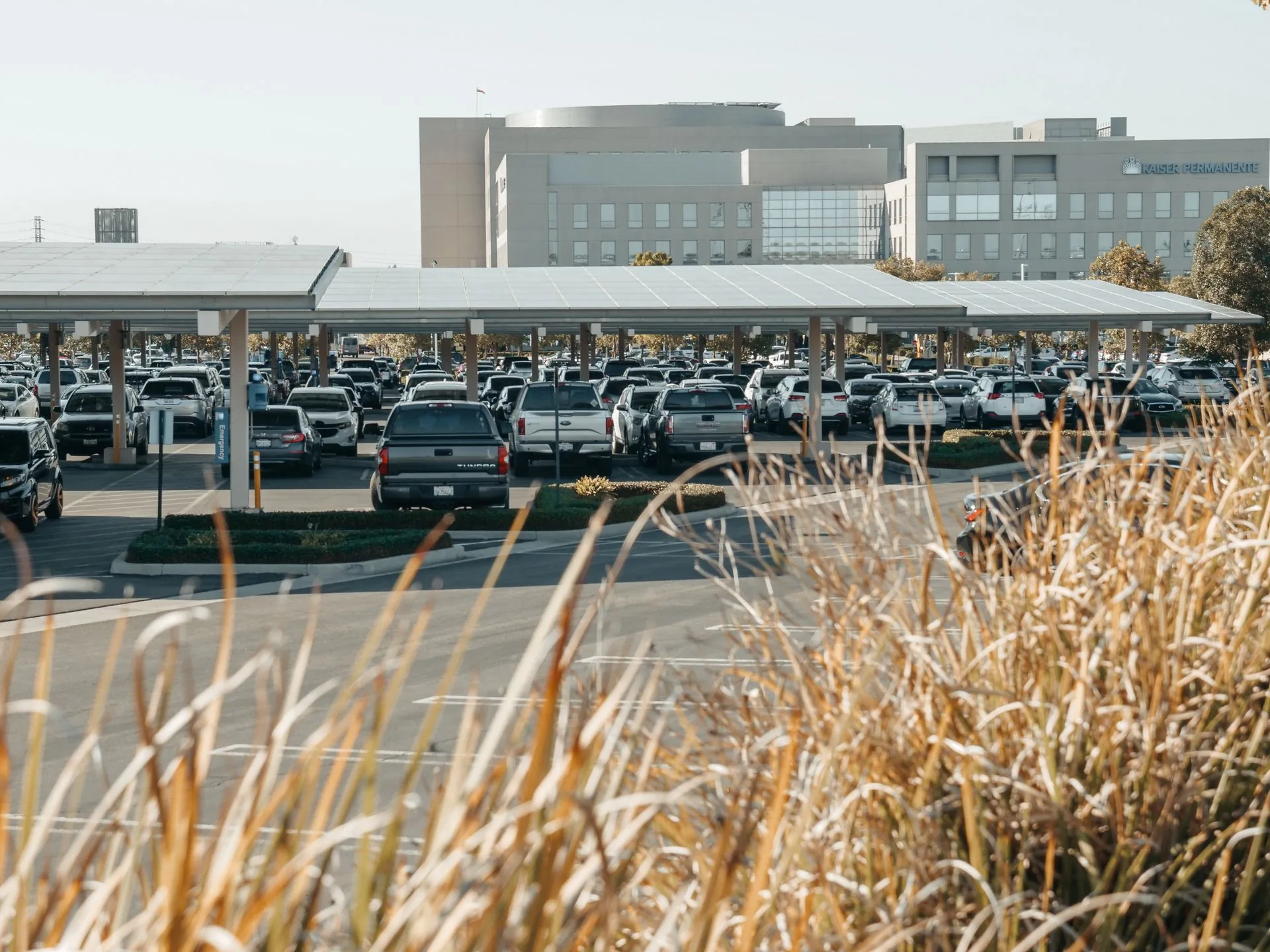
Two things push Florida owners toward canopies rather than roofs. The first is roof condition. Many commercial roofs cannot host a 25-year array without being re-roofed first, and mounting panels on a membrane near the end of its life means paying to remove and reinstall the system at re-roofing. A parking canopy sidesteps that by putting the array on new dedicated steel. The second is available area: a large surface lot often offers more unshaded, correctly oriented space than the roof above the building it serves, so a canopy can carry a bigger system.
The demand side has shifted too. A standard Florida Power & Light general service demand account now pays roughly $15 per kW for its single highest 30-minute interval each month, and Florida Power & Light’s electric tariff sets those charges before taxes and riders. Solar trims the energy portion of that bill, and where a lot also supports commercial battery storage, the pair can hold the metered peak down. A canopy that shades cars, cuts the energy bill, and supports future EV charging is doing three jobs on land that was already paved.
Tenant and customer expectations add a fourth reason. Shaded parking is a visible amenity that retail centers, medical offices, and multi-tenant campuses can point to, and it protects vehicles from the heat that makes a Florida lot uncomfortable for much of the year. For owners courting tenants who track sustainability commitments, on-site generation that anyone can see from the lot is easier to explain than a rooftop array no visitor ever notices. None of this makes a canopy the right call on its own, but it is why the conversation now starts with the parking lot as often as the roof.
How does a commercial solar carport differ from a rooftop array?
The panels and inverters are largely the same hardware used in a rooftop solar installation. What differs is everything holding them up and everything underneath. A carport is an occupied structure over vehicles and people, so it is engineered to a higher wind standard, founded on drilled piers or footings, and coordinated with the lot’s drainage, striping, and lighting. Those differences set both the cost and the schedule.
| Factor | Rooftop array | Solar carport |
|---|---|---|
| Structure | Uses the existing roof and racking ballast or attachments | New steel columns, beams, and foundations engineered for wind uplift over occupied space |
| Site work | Minimal; work stays on the roof | Foundations, trenching for conduit, drainage and striping coordination, lot closures |
| Best fit | Sound roof with years of service life and clear area | Large surface lots, aging or space-limited roofs, sites that want shade and EV readiness |
| Added value | Generation only | Generation plus vehicle shade and a natural home for EV charging |
Neither option is automatically right. Where the roof is newer and open, a rooftop array is usually the lower-cost path to the same production, and AGT’s commercial solar engineering process weighs the two against a building’s actual roof age, lot geometry, and load profile before recommending one.
Orientation and shading matter more on a lot than on a roof. A canopy can be built to tilt its panels toward the sun regardless of how the building is aligned, which can lift production over a fixed rooftop layout, but nearby buildings, light poles, and mature trees cast shadows across a lot that a roof three stories up never sees. A canopy also concentrates a great deal of weight and wind load onto a small number of foundations, so the structural engineering is less forgiving than spreading ballast across a roof. Net metering does not change the comparison: Florida’s net metering rule lets customer-owned generation offset on-site energy use and credits any excess in kilowatt-hours, so a carport is credited the same way whether the panels sit over cars or over the roof.
What drives the cost of a commercial solar carport?
The panels are rarely the largest line on a carport budget. Steel, foundations, and site work usually are, and most budget surprises come from items a proposal left vague. List every driver below in each bid so proposals compare on the same scope rather than on a headline price.
| Cost driver | Why it moves the price | How to pin it down before award |
|---|---|---|
| Structural steel and design | Wind-load engineering over occupied space sets member sizes | Wind design criteria and stamped structural drawings as a line item |
| Foundations | Soil conditions decide pier depth and rebar | Geotechnical report referenced; foundation type stated per bid |
| Site and civil work | Trenching, drainage, striping, and lot closures | Civil scope, restriping, and phasing plan written into the bid |
| Electrical and interconnection | Service upgrades, conduit runs, utility agreement | Interconnection path and any service upgrade priced, not assumed |
| EV charging provisions | Conduit and capacity for future chargers | Make-ready scope stated even if chargers come later |
Illustrative energy value (FPL general service demand rate; figures rounded for illustration only)
System = 500 kW canopy · assumed annual production ≈ 750,000 kWh in Florida
Energy offset at an $0.08/kWh blended commercial energy rate = about $60,000 per year
Demand savings depend on the interval data and any paired battery, and are counted separately.
Excludes demand charges, incentives, financing, taxes, and degradation. Illustrative only; not an estimate for any building.
The panel and inverter count is the part of the budget that scales cleanly with system size; the rest does not. Doubling the canopy area roughly doubles the module cost, but foundation and civil work depend on soils, drainage, and how much of the lot has to close during construction, so two lots of the same size can price very differently. This is why a bid built around dollars per watt alone is misleading for a carport, and why the drivers above belong in every proposal as separate lines.
Against those costs sit incentives that change on a calendar. As of September 2026, the federal clean electricity investment credit still covers qualifying commercial solar and storage, and IRS guidance on the clean electricity investment credit governs how it is claimed; SEIA’s summary of the 2025 tax law tracks the placed-in-service and beginning-of-construction deadlines that followed the 2025 law. Utility and state programs shift as well, and the DSIRE database of state and utility incentives is the standard place to confirm what is live in a given service territory. Ownership structure decides who can use a credit, which is why AGT’s solar financing page walks through cash, loan, and third-party options with a tax advisor.
What changes when you add battery storage under a carport?
Adding storage turns a canopy from an energy project into a demand and resilience project. A commercial battery storage paired with the carport can cap the monthly demand peak and, if designed with islanding equipment and a reserved state of charge, carry critical loads through an outage. The trade-off is that every kilowatt-hour held in reserve for backup is unavailable for shaving the bill, so the owner should decide which job the battery is bought for before design starts.
Storage also brings fire code into the project. Stationary energy storage in Florida must comply with NFPA 855 as adopted through the Florida Fire Prevention Code, and separation, ventilation, and responder access decide where cabinets sit. A carport lot often has room for an outdoor equipment pad away from occupied space, which is usually the simplest path. Research bears out the pairing: a Berkeley Lab solar-plus-storage analysis found that solar combined with storage almost always saves more than either alone, with the largest gains where loads run into the evening and cloud cover is intermittent, a fair description of a Florida summer.
Charging behavior is the other reason storage and carports pair well. A lot that adds EV chargers can create sharp new demand peaks exactly when several vehicles charge at once, and a battery sitting under the same canopy can smooth those peaks so the chargers do not drive up the demand charge the solar was meant to reduce. Sizing that battery is an interval-data exercise, not a rule of thumb, and it should account for how the site expects charging to grow over the system’s life. AGT’s commercial solar engineering process sizes storage from a year of metered data rather than from monthly bills.
Which code and permitting items apply to Florida solar carports?
A carport is permitted as a structure, not just an electrical system, so it clears a longer list than a rooftop array. These items change on a calendar and belong to named professionals; none is decided here.
| Item | Status as of September 2026 | Who confirms |
|---|---|---|
| Wind design | High-Velocity Hurricane Zone rules apply in Miami-Dade and Broward; the 9th Edition Florida Building Code takes effect Dec. 31, 2026 | Engineer of record and building official |
| Foundations | Pier or footing design follows the site geotechnical report | Structural and geotechnical engineers |
| Interconnection, net metering | Rule 25-6.065 and each utility’s interconnection agreement govern export credit | Utility and project engineer |
| Federal credit | Section 48E treatment and its deadlines | Owner’s tax advisor |
| Fire code (if storage) | NFPA 855 (2023) as adopted by the state fire marshal | Local fire official |
Whether a project triggers HVHZ provisions, which code edition governs its permit, and what foundation design is required are determinations for the engineer of record and the local building official, not for a brochure or a bid.
Commercial solar carport checklist for Florida property owners
- Owner or asset manager: Decide whether the goal is energy savings, demand reduction, backup, EV readiness, or a mix, and state the ownership horizon it must serve.
- Facility manager: Pull 12 months of interval data and note when the building’s peaks occur.
- Civil engineer: Confirm lot drainage, parking counts, and accessibility are preserved under the canopy.
- Structural engineer: Set the wind design criteria and foundation type from the site’s soils and code edition.
- Contractor: Price steel, foundations, civil work, electrical, and EV make-ready as separate lines; the questions in how to select a solar contractor help compare bids.
- Tax advisor: Confirm credit eligibility and beginning-of-construction status for the ownership structure chosen.
- Owner: Require close-out documents and a solar operations and maintenance plan so the array performs across its service life.
Frequently Asked Questions
Do commercial solar carports cost more than rooftop solar in Florida?
Usually, yes, for the same system size. A carport adds steel columns, foundations, and site work that a rooftop array does not need, so the installed cost per watt is typically higher. The trade-off is that a carport avoids re-roofing costs on an aging roof, can host a larger system on a big lot, and adds vehicle shade and EV readiness that a roof cannot.
How much wind can a Florida solar carport withstand?
Carports in Florida are engineered to the wind loads in the Florida Building Code, with stricter High-Velocity Hurricane Zone requirements in Miami-Dade and Broward counties. The specific design wind speed and member sizes are set by the engineer of record for the site, and the 9th Edition of the code takes effect December 31, 2026.
Can a solar carport support EV charging stations?
Yes, and building the conduit and electrical capacity for chargers during construction is far cheaper than trenching a paved lot later. Even when chargers are installed in a later phase, owners commonly scope the make-ready wiring up front so the canopy is EV-ready from day one.
Is commercial solar still eligible for a federal tax credit in 2026?
As of September 2026, qualifying commercial solar and storage remain eligible under the Section 48E clean electricity investment credit, subject to placed-in-service and beginning-of-construction deadlines and foreign-entity rules. Whether a specific project qualifies is a determination for your tax advisor.
How long does it take to build a commercial solar carport?
The on-site build is only part of the timeline. Structural engineering, permitting, a geotechnical report, foundation curing, and utility interconnection often set the overall schedule, and lot work is usually phased so parking stays partly open. Ask each bidder for a schedule that shows permitting, foundations, and lot-closure phasing.
Should the parking lot be repaved before a solar carport is installed?
Not necessarily, but the lot’s condition should be assessed before design. Foundations are set into the subgrade regardless of surface, and coordinating any planned repaving or restriping with the carport build avoids tearing up new pavement. A civil engineer should confirm drainage and accessibility under the finished canopy.
Conclusion
A commercial solar carport in Florida is a strong option when the roof cannot carry an array, the lot is large, and the owner values shade and EV readiness alongside generation. It costs more to build than a rooftop system of the same size, carries real structural and permitting work, and depends on incentives that move on a calendar, so the decision starts with the building’s data and the site’s constraints. Advanced Green Technologies runs engineering, procurement, and construction in-house and was ranked the #1 commercial and industrial EPC solar contractor in Florida on Solar Power World’s 2026 Top Solar Contractors list, as documented in AGT’s 2026 ranking announcement. Where a lot is the best surface a property has, solar carports put it to work.