
Top Commercial Rooftop Solar in Fort Lauderdale
Introduction:
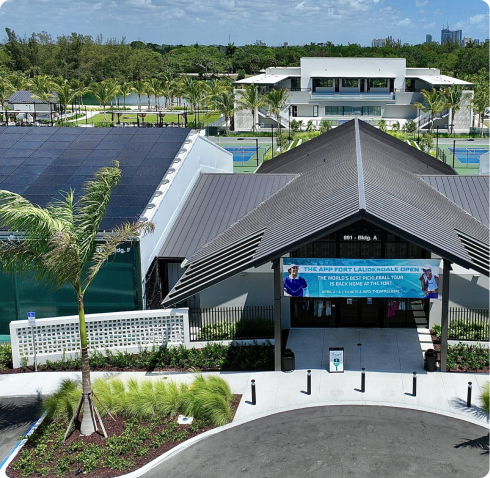
Commercial rooftop solar in Fort Lauderdale turns unused roof space on warehouses, offices, and retail centers into on-site power, cutting utility costs while meeting sustainability goals. Because Fort Lauderdale sits in Broward County’s High-Velocity Hurricane Zone (HVHZ), every array must be engineered to the Florida Building Code for extreme wind uplift. Advanced Green Technologies (AGT) designs, permits, and builds hurricane-rated rooftop solar as a single-source EPC contractor headquartered right here in Fort Lauderdale. Fort Lauderdale’s abundant sunshine and high commercial energy demand make it one of Florida’s strongest markets for solar. But the same coastline that delivers the sun also brings hurricanes, salt air, and some of the strictest wind codes in the country. This guide explains how commercial rooftop solar in Fort Lauderdale works, what it takes to build it to code, and how to size a system for your facility.
What makes commercial rooftop solar in Fort Lauderdale worth it?
Commercial rooftop solar in Fort Lauderdale lets building owners generate clean electricity from otherwise idle roof space, offsetting expensive daytime utility loads and hedging against rising grid rates. For most commercial properties, the roof is the lowest-cost, lowest-conflict place to put solar. Because it uses space you already own, rooftop solar avoids the land and zoning hurdles that ground-mount projects face. Key advantages for Fort Lauderdale facilities include:
Lower operating costs
on-site photovoltaic (PV) generation reduces the kilowatt-hours (kWh) you buy from the grid, especially during peak afternoon demand.
Higher property value
energy-producing assets and lower operating expenses make commercial buildings more attractive to buyers and tenants.
Roof protection
panels shade the membrane below, reducing the thermal cycling and UV exposure that shorten roof life.
Sustainability proof
visible clean-energy infrastructure supports ESG and corporate responsibility goals.
Florida net metering can also credit you for surplus production sent back to the grid.
Why do solar panels on commercial rooftops perform so well in Fort Lauderdale?
Solar panels on commercial rooftops perform well in Fort Lauderdale because the region receives roughly five or more peak sun hours per day year-round, and large flat commercial roofs offer wide, unshaded surfaces ideal for PV arrays. Flat roofs allow tilted, ballasted or attached racking that can be angled for optimal solar capture. The main local variables are heat and salt air: high rooftop temperatures slightly reduce panel output, so low-degradation, high-tolerance modules matter, while coastal humidity and salt exposure call for corrosion-resistant, marine-grade components. Engineered correctly, solar panels on commercial rooftops in Fort Lauderdale deliver reliable production for 25 years or more, even through the demands of a subtropical climate.
How does commercial rooftop solar installation work in Broward County?
Commercial rooftop solar installation in Broward County follows an engineering-first EPC process – site and structural assessment, code-compliant design, permitting, installation, and commissioning – all sealed to Florida Building Code wind standards. Because Fort Lauderdale is in the HVHZ, wind-uplift calculations under ASCE 7-22 (design wind speeds near 170 mph for typical commercial buildings) drive the mounting and attachment design. AGT manages every stage through its in-house Solar Design, Metal Fabrications, and Construction divisions, so nothing is handed off to third parties. A typical commercial rooftop solar installation moves through five stages:
Site and drone survey
Assess roof condition, structural capacity, and shading.
Engineering and design
Size the PV array, select mounting, and seal wind-load calculations.
Permitting
Secure Broward County and municipal approvals under the Florida Building Code
Installation
Mount panels, inverters, and wiring with minimal disruption to operations.
Commissioning and monitoring
Test, energize, and enable real-time performance monitoring.
How do you choose commercial rooftop solar panels for Florida conditions?
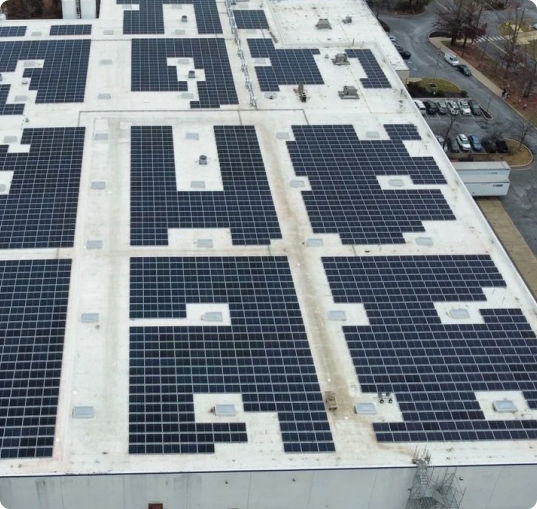
Choosing commercial rooftop solar panels for Fort Lauderdale means prioritizing wind-rated mounting, low-degradation modules, and corrosion-resistant components that withstand heat, humidity, and salt air. High-efficiency monocrystalline panels are the common choice for their strong output in limited roof space, while thin-film may suit specific low-load or membrane-integrated roofs. Just as important as the panels are the inverters (AGT works with SolarEdge), the racking rated for wind uplift, and mounting details that preserve waterproofing and roof warranties. AGT’s relationships with roofing manufacturers and FM Global Insurance help ensure commercial rooftop solar panels are installed without voiding coverage – a detail generic installers often overlook in high-wind, high-value Florida properties.
What size commercial rooftop solar system does your facility need?
System size depends on your roof area, structural capacity, and energy use. As a rough planning guide, commercial rooftops in Fort Lauderdale typically support the following:
| Facility Type | Typical Usable Roof Area | Indicative System Size | Common Use |
|---|---|---|---|
| Versatility & Compatibility | 5,000–15,000 Sq Ft | ~30–100 KW | Offset Daytime Load |
| Attraction & Engagement | 50,000–200,000 Sq Ft | ~250 KW–1.5 MW | Large Offset, Load Shifting With Storage |
| Value Enhancement | 100,000+ Sq Ft | 1 MW And Up | Major Offset, Potential Microgrid |
| Remote Management | 10,000–40,000 Sq Ft | ~75–300 KW | Common-Area And Tenant Offset |
These ranges are indicative only; a detailed site assessment converts them into a precise, code-compliant design matched to your load profile and roof structure.
Why choose Advanced Green Technologies for Fort Lauderdale rooftop solar?
Advanced Green Technologies is a Fort Lauderdale–based commercial solar EPC contractor built specifically for Florida’s conditions, with in-house design, fabrication, and construction under one roof. Founded in 2007 and 100% employee-owned, AGT has installed 380+ megawatts of rooftop and ground-mount solar and is licensed (CVC56792), bonded, and insured. Our single-source model means one accountable team handles engineering, permitting, high-wind installation, drone surveys, and operations and maintenance – no finger-pointing between contractors. For Fort Lauderdale building owners, that translates to hurricane-rated systems designed to the HVHZ standard, delivered on schedule with minimal disruption to your operating facility.
Frequently asked questions
1. Is Fort Lauderdale a good location for commercial rooftop solar?
Yes. Fort Lauderdale receives strong year-round sunlight and has high commercial energy demand, making rooftop PV a sound way to cut utility costs and add property value.
2. Do commercial rooftop solar panels need to be hurricane-rated in Fort Lauderdale?
Yes. Fort Lauderdale is in Broward County’s High-Velocity Hurricane Zone, so mounting and attachments must be engineered to Florida Building Code wind-uplift standards, with design wind speeds near 170 mph.
3. How long does commercial rooftop solar installation take?
Installation timelines vary by system size and permitting. Design and permitting often take longer than the physical install, and AGT schedules work in stages to minimize disruption to your operations.
4. Will solar panels damage my commercial roof?
No – when installed correctly. AGT coordinates with roofing manufacturers and FM Global Insurance to protect waterproofing and warranties, and panels actually shield the membrane from UV and heat.
5. What roof types work for commercial rooftop solar?
Most flat and low-slope commercial roofs – TPO, EPDM, modified bitumen, and metal – can support solar with the appropriate ballasted or attached racking, subject to a structural assessment.
6. Can I add battery storage to a commercial rooftop solar system?
Yes. Pairing rooftop solar with battery storage enables load shifting, peak-demand reduction, and backup power during grid outages.
7. Do I still get a power bill after installing rooftop solar?
Usually yes, but a smaller one. Rooftop solar offsets a portion of your usage, and Florida net metering credits surplus production, reducing your net grid consumption.
8. Is commercial rooftop solar still worth it in 2026 with the tax-credit changes?
For most commercial properties, yes. The Section 48E commercial credit remains available on a tightened timeline, and long-term utility savings continue regardless of federal incentives.

