
Home »
Benefits of Floating Solar Systems for Reservoirs and Water Bodies
Introduction
The demand for clean, renewable energy continues to accelerate as utilities, municipalities, and businesses seek scalable solutions that reduce carbon impact without consuming valuable land. Floating solar systems—also known as floating photovoltaic (FPV) installations—are emerging as a highly effective answer to this challenge.
Installed on reservoirs and water bodies, floating solar panels deliver strong energy performance while supporting water conservation and environmental stewardship. Advanced Green Technologies, a leader in commercial solar solutions across Florida, specializes in floating solar farm installations designed for long-term efficiency, durability, and regulatory compliance.
This article explores how floating solar panels work, their environmental and economic benefits, and why floating solar farms are uniquely suited for Florida’s climate and water infrastructure.
Understanding Floating Solar Systems
What Are Floating Solar Panels?
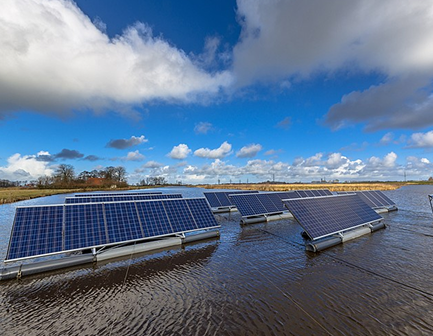
Floating solar panels—also referred to as floating photovoltaic (FPV) systems—use modular floats to support solar arrays on water surfaces. Electrical cabling is routed safely to onshore inverters and substations, allowing seamless grid integration.
Unlike land-based solar farms that require extensive real estate, floating solar panels utilize underused water assets, making them ideal for regions with land constraints or environmental preservation goals.
How a Floating Solar Farm Works
A floating solar farm operates by anchoring solar-equipped floating platforms to a water body and transmitting the generated electricity to nearby onshore infrastructure. A floating solar farm consists of interconnected floating structures secured by engineered mooring systems. These anchors accommodate water-level fluctuations while maintaining system stability during wind or weather events.
Power generated by the solar panels flows through waterproof cabling to inverters and is then delivered to the grid or consumed directly by adjacent facilities. This configuration is especially effective for water treatment plants, industrial sites, and municipal utilities.
Environmental Benefits of Floating Solar Panels
Reducing Land Use with Floating Solar Farms
By installing solar infrastructure on reservoirs and retention ponds, organizations can meet clean energy targets without deforestation, grading, or habitat displacement.
Minimizing Water Evaporation
Research indicates that floating solar farms can reduce evaporation by up to 70%, a critical advantage for Florida’s drinking water supplies, agricultural irrigation systems, and long-term water management strategies.
Controlling Algae Growth and Improving Water Quality
By improving water quality, floating solar farms reduce the need for chemical treatments and maintenance interventions—creating added operational value for municipalities and water authorities.
Energy Efficiency and Performance Advantages
Enhanced Efficiency Due to Water Cooling
One of the lesser-known benefits of floating solar panels is their ability to stay cooler than traditional land-based solar panels. Because they are surrounded by water, the natural cooling effect helps maintain optimal temperatures, preventing overheating.
This leads to increased efficiency and energy output, making floating solar farms particularly advantageous in hot climates like Florida, where excessive heat can lower the performance of traditional solar installations.
Ideal for Hot Climates Like Florida
Florida’s sunny climate makes it an ideal location for solar energy production. However, high temperatures can negatively impact solar panel efficiency. Traditional land-based solar panels may suffer from heat buildup, reducing their effectiveness over time.
By contrast, floating solar panels benefit from constant cooling, ensuring they perform at their best even during the hottest months. This makes them an excellent option for Florida’s energy infrastructure.
Economic and Financial Benefits
Lower Land Acquisition Costs
By leveraging existing water bodies, businesses and municipalities can deploy large-scale solar capacity with fewer regulatory and real estate hurdles.
Higher Energy Yield and Return on Investment (ROI)
For organizations balancing sustainability goals with financial performance, floating solar farms offer a compelling long-term value proposition.
Government Incentives and Financial Support in Florida
Advanced Green Technologies assists clients in identifying applicable incentives and structuring projects to maximize financial returns.
Application of Floating Solar Farms in Florida
Ideal Locations for Floating Solar Systems
- Reservoirs and Lakes: Large, controlled water bodies ideal for utility-scale systems
- Water Treatment Plants: Facilities with high electricity demand and on-site water assets
- Agricultural Irrigation Ponds: Dual-purpose use for power generation and water conservation
Case Studies of Floating Solar Farms in Florida
Challenges and Considerations
Installation and Maintenance Factors
Impact on Aquatic Ecosystems
Why Choose Advanced Green Technologies for Floating Solar Solutions?
Expertise in Floating Solar Farm Installations
Custom Solar Solutions for Florida Businesses and Municipalities
Proven Track Record of Success
Conclusion
If you’re exploring floating solar farm opportunities, Advanced Green Technologies is ready to help you design and deploy a system tailored to your goals. Contact us today to learn how floating solar panels can transform your energy strategy.